Cross-Functional Alignment Around Growth
-
When Capital Group partnered with KKR to launch new private-market investment offerings, internal teams were not yet aligned on the value proposition, market positioning, or how marketing and sales should work together to support growth. I helped turn that ambiguity into a coordinated go-to-market strategy and a measurable marketing + sales ecosystem.
-
This was a high-stakes growth opportunity. Capital Group was entering a strategically important space with new investment vehicles in partnership with KKR, but internal teams were still working through fundamental questions: what exactly was the value proposition, how should these offerings be distinguished across asset classes, and how should they be positioned in the market in a way that sales teams could effectively use.
Without cross-functional alignment, the risk was not just weak messaging. The bigger risk was that marketing, sales, and partner teams would operate from different assumptions, leading to inconsistent narratives, underperforming collateral, and missed growth potential in a future-facing area of the business.
The opportunity was to create shared clarity early, then build a broader ecosystem that connected product positioning, marketing deliverables, sales enablement, and success measurement.
-
Helping internal teams define and align around the value proposition for a new set of investment offerings. Facilitating cross-functional workshops to shape product positioning and go-to-market direction. Bridging perspectives across marketing, sales and partner stakeholders. Learning from post-launch sales behavior to understand what was resonating in the market. Defining the broader marketing + sales ecosystem and the phases required to support growth. Creating a framework that connected touchpoints, outcomes and KPIs across the journey.
How I Approached It
-
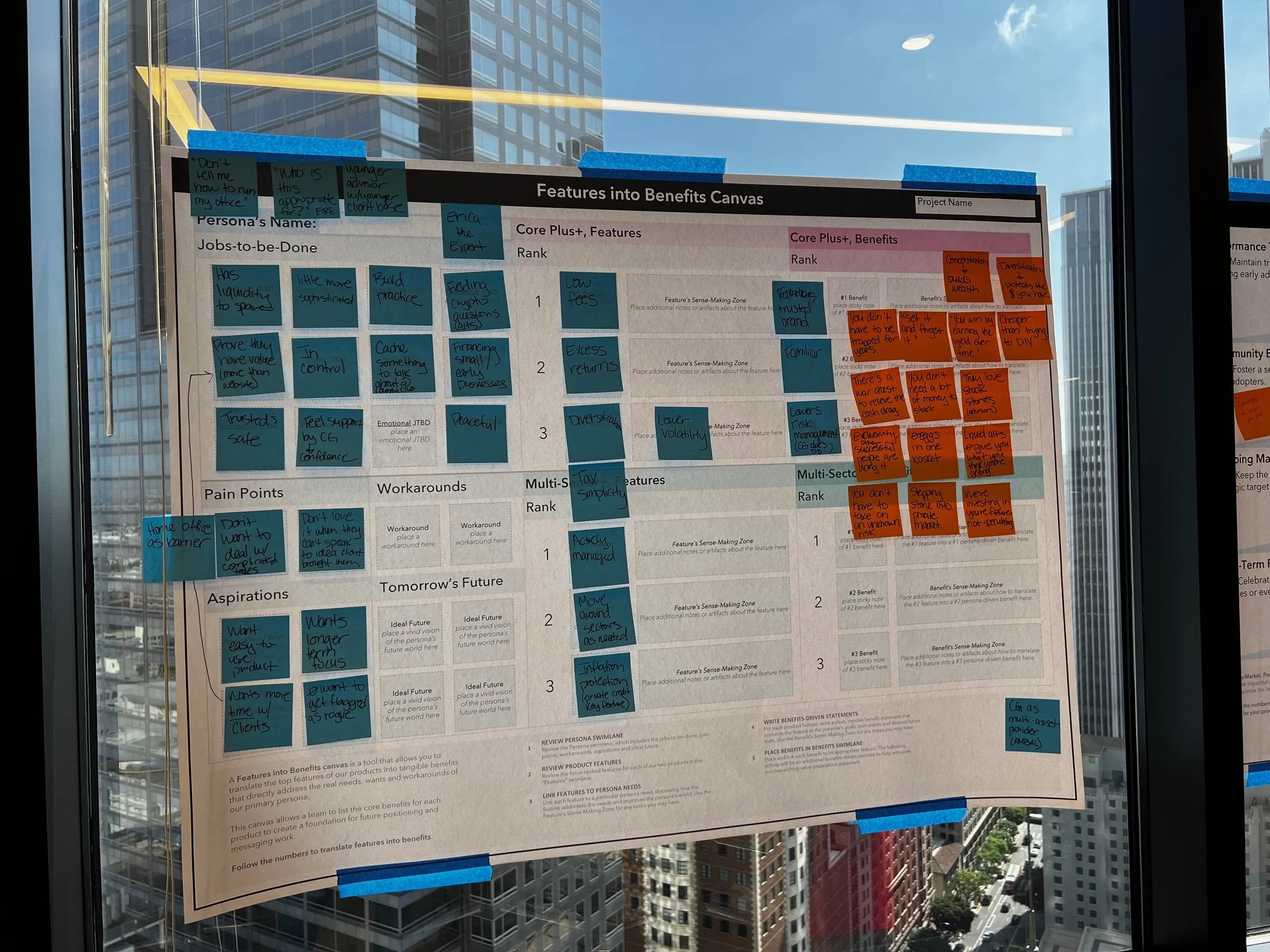
I facilitated an initial workshop with Capital Group marketing, sales, and supporting teams to define the core value proposition of the new offerings. At that stage, the team was still working through how to describe the products clearly and how to differentiate them across asset classes. My role was to help bring structure to the ambiguity, surface competing assumptions, and guide the group toward a shared foundation.
-
Once the internal point of view was clearer, I facilitated a second workshop that included KKR. This helped the combined teams align not only on what the products were, but on how they should be positioned in the market. The goal was to ensure that product narrative, partnership story, and market-facing strategy worked together rather than competing with one another.
-
Rather than stopping at messaging, I looked at how the products would actually be sold and supported in practice. After launch, I partnered with sales to understand how the offerings were being discussed with clients, which collateral and deliverables were resonating, and where friction or disconnects still existed. This allowed me to ground the next phase of the work in real-world market feedback rather than internal assumptions.
-
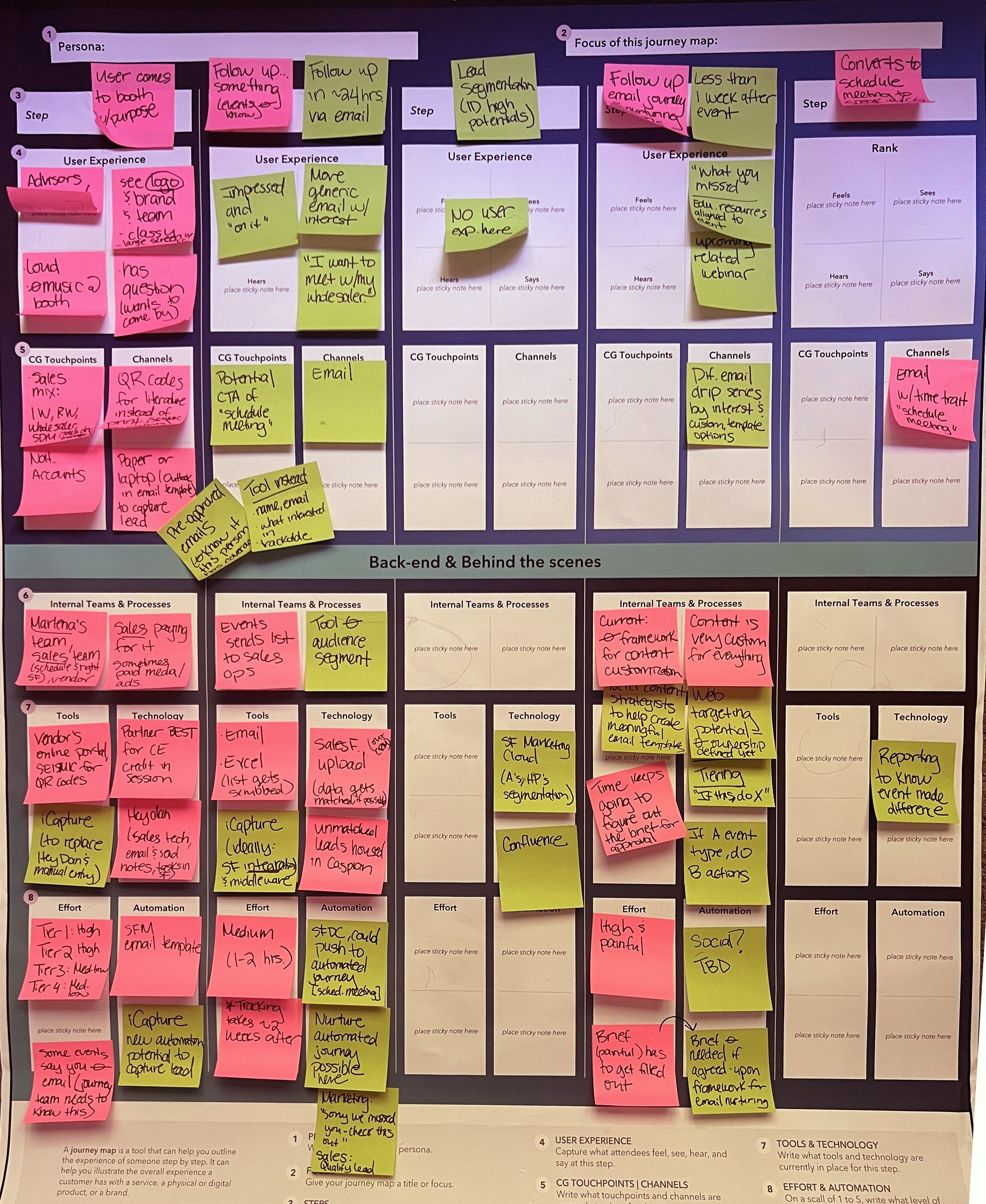
Using a traditional service blueprint as a starting point, I adapted the framework for this specific business need. Instead of focusing narrowly on service operations, I used it to help the team visualize the broader ecosystem of marketing and sales touchpoints, dependencies, and moments of value creation tied to the new offerings.
-
Once the team had greater clarity around the value proposition and broader marketing + sales ecosystem, I helped focus efforts on creating educational content for financial advisors. I drew on my background in instructional design and combined it with experience design principles to shape learning experiences that made the new offerings easier to understand, discuss, and use in practice.
Outcomes
-
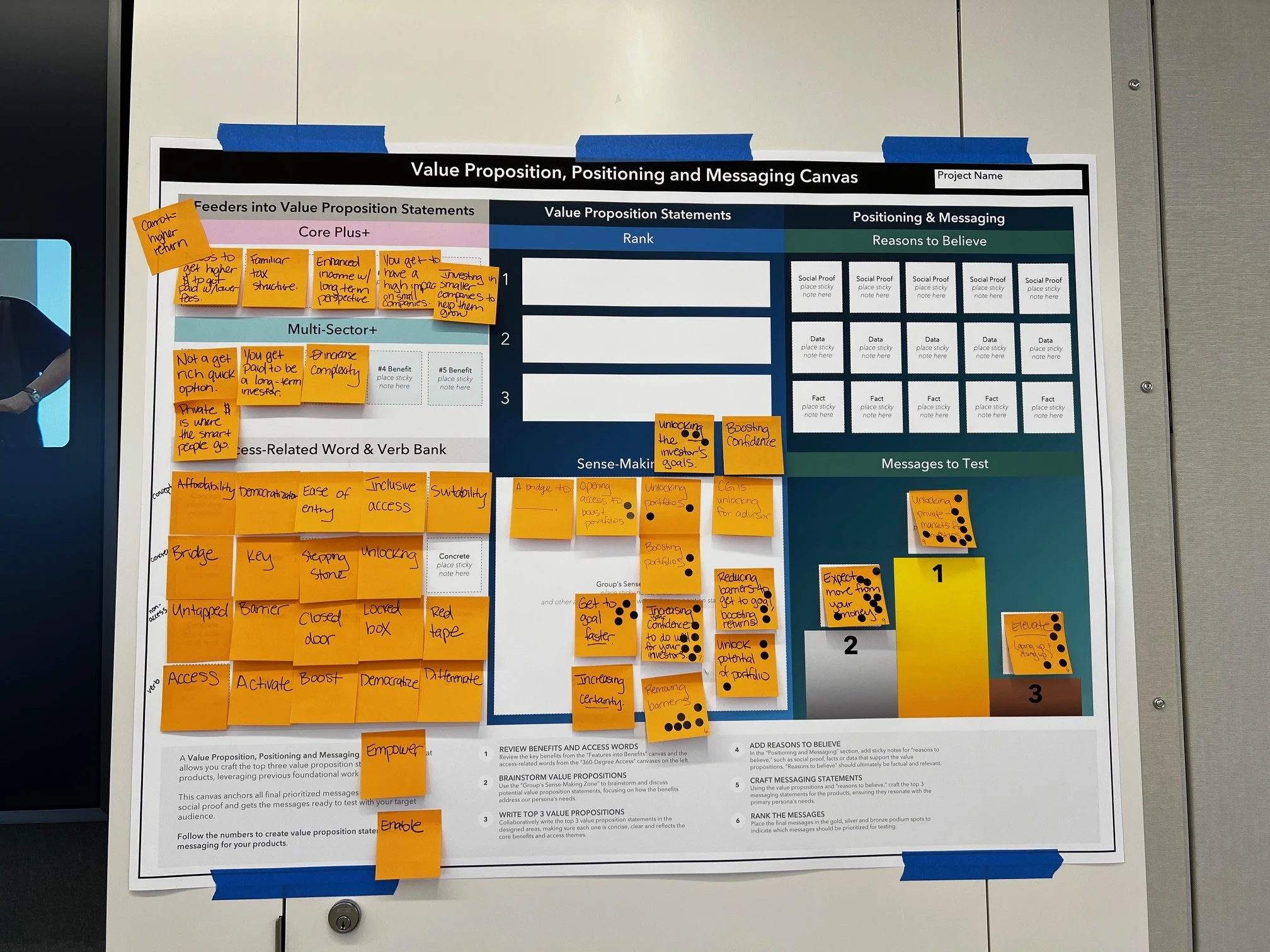
The workshops helped Capital Group stakeholders build shared understanding of what made the new offerings valuable, how to distinguish them across asset classes, and what story needed to be told internally and externally.
-
Bringing both organizations into the positioning process created better alignment around how the products should show up in the market. This reduced the risk of fragmented narratives and improved confidence in the launch strategy.
-
By learning directly from sales after launch, I helped the team understand which messages and deliverables were effective, which were not, and why. This made it possible to refine support based on actual customer-facing insight rather than theory alone.
-
Once the value proposition and ecosystem were clear, the team and I were able to focus on creating educational content for financial advisors that better supported adoption of the new offerings. By combining instructional design with experience design, I helped shape a learning series that later won two Gold Brandon Hall Group HCM Excellence Awards: Best Learning Initiative and Excellence in Learning Design.
Details here: https://www.capitalgroup.com/advisor/investments/public-private-plus.html